Architects engage in a significant function in the completion of fundamentally every design task. They are in demand of creating new buildings and adding or modifying existing properties.
Apart from these responsibilities, architects can give knowledgeable tips on restoring, renovating, or conserving historic buildings. They also determine the placement of electrical wirings, entry doorways and panels, and rest room layouts.
Though aesthetic and creative values are vital, architects ought to contemplate stability and safety when coming up with blueprints. Unlucky occasions like slip and fall incidents, electrical explosions, or in worse situations, constructing collapse could guide to lawsuits if the framework had defects brought on by negligence.
Provided the significance of their accountability, the designs that architects generate need to be specific. To accomplish this, they use an array of specialised equipment and products. Beneath, this post will examine some of them and their capabilities.
Applications Each individual Architect Requires
Architecture learners are initially taught how to produce ideas making use of bodily drafting devices. Here are several architectural equipment they use for handbook sketching:
- Tablet pen
Principal drafts or sketches are performed employing analog, tactile devices. The process involves a whole lot of workspaces and can compromise the architect’s comfort when they are not doing work in a good studio.
A pen tablet, like the iPad Professional or an Apple pencil, saves modern day-working day architects the trouble of utilizing analog devices considering that it eradicates the require for bond blotter paper. Also, since the files are stored in program, holding them risk-free is considerably much easier.
2. Architectural structure software
Many architects use several applications to total their perform. For instance, if you operate in architecture, you may perhaps use an app to photograph your site.
Some apps can also generate designs quickly, streamlining the layout course of action. In addition, instruments obtainable to architects regularly improve as know-how improvements, and extra impressive apps may perhaps arise shortly.
3. Gloves for safety
Architects regularly do the job with knives and other sharp objects. Incidents and mishaps brought about by a absence of warning or aim can easily lead to numerous hand accidents. For this reason, most architects use protective gloves when operating on their buildings to avoid obtaining pierced and cut.
4. T-square
A T-sq. is an necessary, typical resource in any architect’s toolbox. Students and industry experts use this handy instrument to attract different angles on the architect’s scale, permitting for a broad range of visual ideas.
5. Drafting paper
Architects can’t function without having good quality paper. The final structural strategy is laid out on drafting paper that can accommodate prints in huge format. Architects also use blueprint paper coated with a distinctive film that turns blue when uncovered to mild. Venture strategies on blueprint paper are illustrated in white.
6. Tracing paper
A person of the most basic instruments that architecture pupils learn to use is tracing paper. For the reason that tracing paper is transparent, they can produce highly in depth and correct replicas of the first illustration. Often, an architect must copy their do the job, and tracing paper will serve as a stencil.
7. Drawing board
The drawing board is a strong, multipurpose desk for building and modifying drawings. It’s helpful every time architects draw sections, ground strategies, standpoint drawings, and elevations.
Of course, architects will need a easy and stable surface to sketch on. It should also have a blocked edge to avert the paper plans and applications from slipping off.
8. French curve
Structural initiatives consist of much more than just straight lines and circles. Therefore, if a compass or a ruler is inadequate, architects flip to the French curve. Clear options are also accessible, which come in helpful when the designer requirements to see outside of the history although sketching.
9. Adjustable triangle
Adjustable triangles are designed from two moveable triangular pieces. They are related to a gradated board with a protractor attached to it. With them, you can change the angles of the two parts working with gradation and make numerous angles. They are also valuable for drawing correct vertical, parallel, and other angled lines.
They’re vital measuring applications that no architect should really go with out. It is applied for measuring angles, so the architect can get all the sizing info expected to create an specific blueprint.
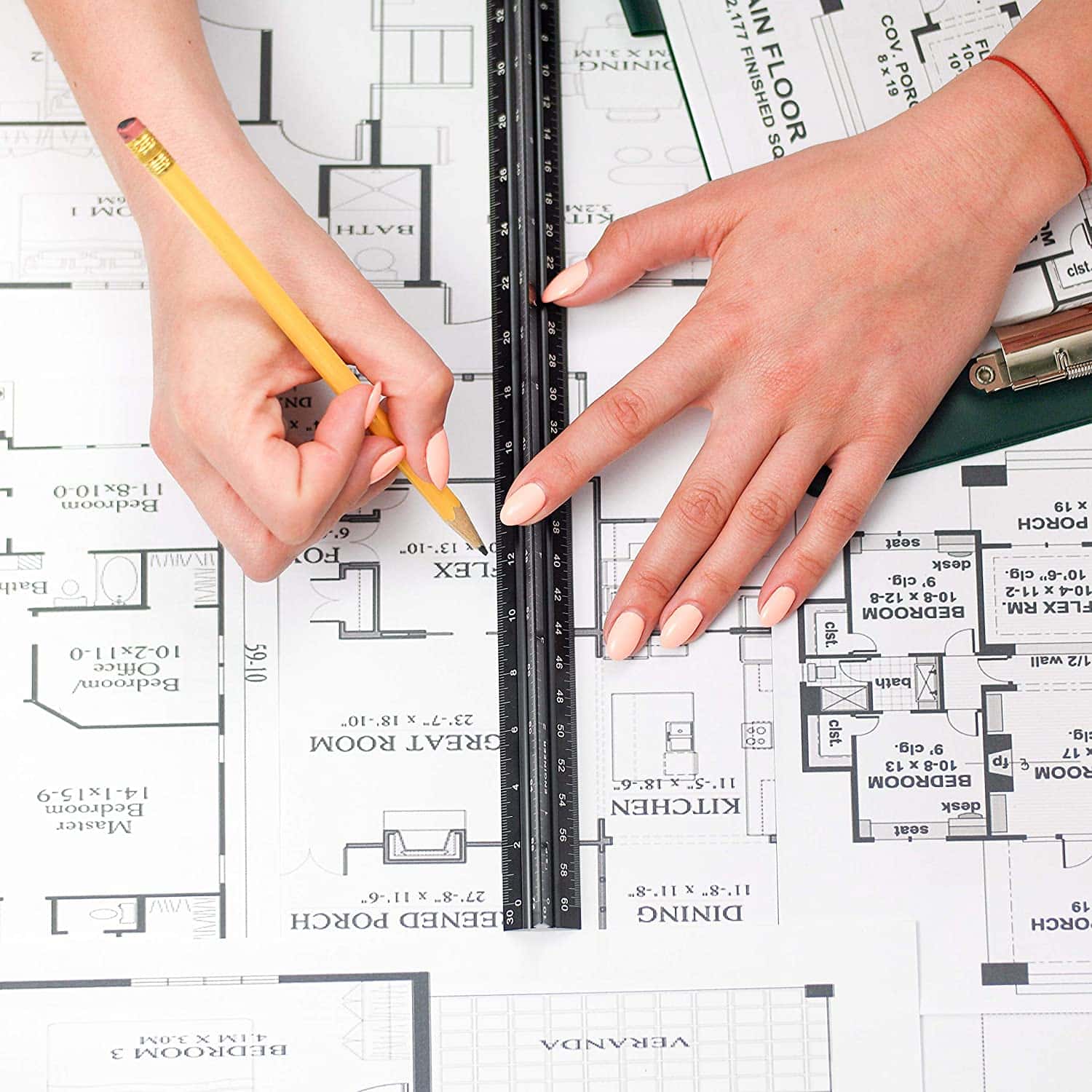
10. Scale ruler
The purpose of a scale ruler is to measure lengths so that the architect can transfer measurements at fixed ratios. It is perfect for measuring and drafting multiview orthographic projections and developing flooring options.
Considering the fact that the scale of architectural drawings is significantly smaller than measurements of daily life-size structures, the ruler displays various size models in proportional increments.
Scale rulers will need to be tough and dimensionally continuous. Although they ended up historically wooden, most modern-day varieties are crafted from aluminum and plastic.
Something to Ponder On
Planning structures entails a ton of operate, from sketching programs to forming products. To provide their vision to existence, architects have to have a established of resources that aid the generation of clean and exact drawings. Furthermore, these applications require good repairs to retain their performance and longevity.

A mom and lover of all points practical. My blogs will aid you find out about almost everything from building a designer kitchen to earning the most of a spare bedroom, choosing the ideal double glazing to the finest indoor gardening suggestions.